
Suicide Prevention: Recognizing the Signs, Starting the Conversation and Saving Lives
September is Suicide Prevention Awareness Month
.....
September is Suicide Prevention Awareness Month .....
Some conversations are uncomfortable. Some are difficult. And some conversations can save a life.
Every September, Suicide Prevention Awareness Month gives us an opportunity to talk openly about suicide, understand the warning signs, challenge the stigma surrounding mental health, and remind people that help is available.
Suicide is not simply a mental health issue. It is a serious public health concern that can affect individuals, families, workplaces, schools and entire communities. According to the World Health Organization, more than 720,000 people die by suicide globally each year, with many more people making suicide attempts.
But there is another message that is equally important:
Suicide can be prevented.
Prevention begins with awareness, compassion, early intervention and a willingness to have difficult conversations.
What Is Suicide?

Suicide refers to death caused by intentional self-directed action. It is often associated with overwhelming emotional pain, hopelessness, psychological distress, trauma, mental health conditions, difficult life circumstances or a combination of factors.
It is important to understand that there is no single reason why someone becomes suicidal.
A person may be experiencing depression, anxiety, grief, relationship difficulties, financial problems, abuse, chronic pain, substance use, social isolation, major life changes or other forms of distress. Sometimes several challenges can build up over time until the person feels unable to cope.
Suicidal thoughts can also occur in people who may appear to be functioning normally on the outside.
Someone can go to work, attend school, socialize, smile, take care of their family and still be experiencing an enormous amount of emotional pain.
That is why checking in matters.
Understanding the Different Forms of Suicidal Behaviour
When we talk about suicide prevention, it is important to understand that suicidal behaviour exists on a spectrum.
Suicidal thoughts or ideation
This involves thinking about death or suicide. These thoughts can range from wondering whether life is worth living to having more serious thoughts about ending one's life.
Having suicidal thoughts is a sign of significant emotional distress. It does not mean that a person is weak, attention-seeking or beyond help.
Suicidal plans
A person may begin thinking about how, when or where they might attempt suicide. This can represent an increased level of risk and should always be taken seriously.
Suicide attempts
A suicide attempt is an act in which a person tries to end their own life but survives. A previous suicide attempt is an important risk factor for future suicide, which is why professional follow-up and ongoing support are so important.
Suicide death
A suicide death occurs when suicidal behaviour results in death.
It is important to avoid describing suicide as the result of one particular event or saying that someone "committed suicide because of" a single problem. Suicide is usually influenced by multiple interacting factors, including psychological, social, biological and environmental factors.
Self-harm is not always suicidal behaviour
Self-harm and suicide are related but they are not the same thing.
Some people engage in self-harm without intending to die. However, self-harm can indicate significant emotional distress and may be associated with increased suicide risk.
Any serious concern about self-harm or suicidal thoughts deserves attention and appropriate professional support.
What Are the Warning Signs?

There is no single sign that can tell us someone is suicidal. However, certain changes in behaviour, emotions and communication can indicate that someone may be struggling.
Watch for:
Talking about wanting to die or disappear
Saying things such as "I have no reason to live" or "Everyone would be better off without me"
Expressing feelings of hopelessness, worthlessness or being a burden
Suddenly withdrawing from friends, family or activities
Significant changes in mood or behaviour
Giving away important or valued belongings
Saying goodbye to people in an unusual or final-sounding way
Looking for ways to end their life
Increased use of alcohol or drugs
Severe agitation, anxiety, anger or emotional distress
A sudden change from intense distress to unusual calmness or apparent resolution
Experiencing a major loss, relationship breakdown, trauma or other overwhelming life event
The World Health Organization identifies several warning signs, including severe mood changes, social withdrawal, talking about ending one's life, looking for ways to die, saying goodbye and giving away valued possessions.
One important thing to remember is that not everyone who is suicidal will show obvious warning signs.
That is why genuine connection matters.
How Do You Know When to Ask?

You don't have to be a mental health professional to ask someone how they are doing.
If someone's behaviour has changed or you are simply worried about them, start the conversation.
You can say:
"I've noticed you've seemed different lately. How are you really doing?"
Or:
"You've been on my mind. Is there something you're going through that you want to talk about?"
If you are concerned about suicide, it is okay to ask directly:
"Are you thinking about suicide?"
Asking someone directly about suicide does not cause them to become suicidal. The World Health Organization states that asking about suicide can actually reduce anxiety and help a person feel understood.
You do not have to have the perfect words.
Sometimes simply listening without judgment is the most important thing you can do.
What Should You Do If Someone Says They Are Suicidal?
Take them seriously.
Do not dismiss what they are saying as attention-seeking, dramatic or "just a phase."
Instead:
Listen.
Give them your attention and allow them to talk.
Stay calm.
Your reaction can influence whether they feel safe continuing the conversation.
Don't judge.
Avoid statements such as "You have so much to be grateful for" or "Other people have it worse."
Ask directly about their safety.
Find out whether they are currently thinking about suicide or are in immediate danger.
Help them connect with professional support.
A psychologist, psychiatrist, doctor, counsellor or other qualified mental health professional can help assess the situation and provide appropriate care.
Don't leave someone alone if you believe they are in immediate danger.
Seek emergency assistance or crisis support.
Help create a safer environment.
When someone is at immediate risk, reducing access to potentially lethal means can give time for the crisis to pass and professional support to be provided. Restricting access to lethal means is one of the evidence-based approaches recommended by the World Health Organization.
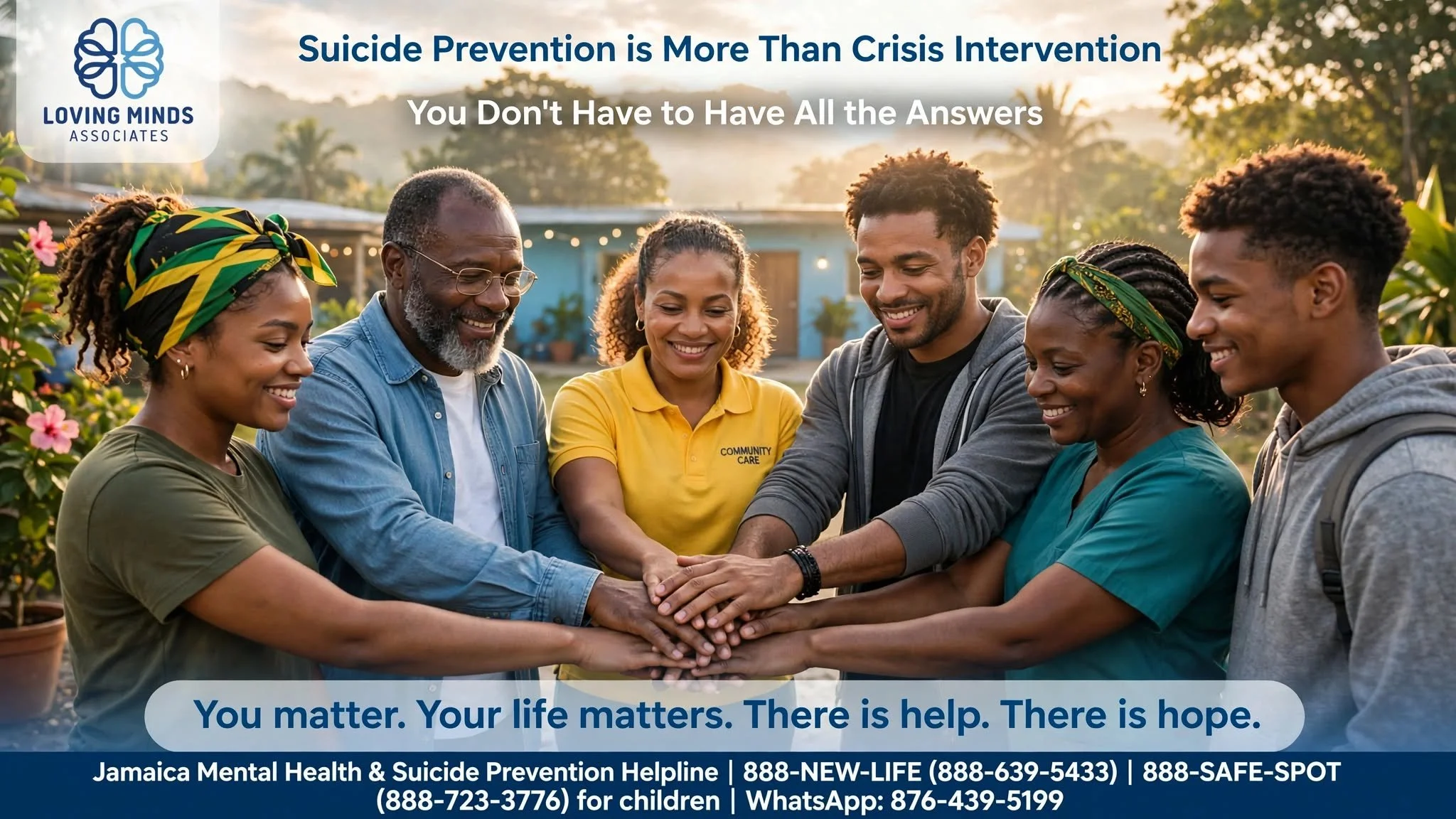
Suicide Prevention Is More Than Crisis Intervention
Prevention doesn't begin when someone reaches a crisis.
It begins much earlier.
It begins when we create environments where people feel comfortable saying:
"I'm not okay."
It means taking mental health seriously in our homes, schools and workplaces.
It means encouraging people to seek professional help before emotional distress becomes overwhelming.
It means checking on the friend who has been unusually quiet.
It means paying attention when a teenager suddenly withdraws.
It means asking a coworker how they are coping after a major loss.
It means making mental health conversations normal rather than something we only discuss when there is a tragedy.
The WHO recommends several evidence-based suicide prevention measures, including early identification and treatment of people affected by suicidal behaviour, responsible communication about suicide, developing social and emotional skills among young people, and reducing access to highly lethal means.
What Can You Do Today?
You don't have to wait for September.
You can:
Check in.
Send the message. Make the phone call. Sit with someone.
Listen.
Sometimes people need to be heard before they are ready to accept advice.
Take warning signs seriously.
Don't assume someone is "just looking for attention."
Encourage professional help.
Therapy and other mental health services can provide support, coping strategies and treatment.
Learn about mental health.
Understanding depression, anxiety, trauma, substance use and other mental health concerns can help us recognize when someone needs support.
Reduce stigma.
Mental health struggles are not a character flaw.
Create safe spaces.
People are more likely to ask for help when they believe they will be heard rather than judged.
If You Are Struggling Right Now
If you are experiencing thoughts of suicide or feel that you may hurt yourself, please do not face that moment alone.
Talk to someone you trust.
Contact a mental health professional.
Go to the nearest emergency department if you are in immediate danger.
In Jamaica, the Ministry of Health & Wellness Mental Health and Suicide Prevention Helpline is 888-NEW-LIFE (888-639-5433). The Ministry identifies this service as a resource for mental health support, including suicidal thoughts and crises.
For children up to age 18, Jamaica's 888-SAFE-SPOT (888-723-3776) also provides support, including WhatsApp access at 876-439-5199.
If you are outside Jamaica, contact your local emergency service or suicide crisis line.
You Don't Have to Have All the Answers
Suicide prevention is not about finding the perfect thing to say.
It is about noticing.
It is about asking.
It is about listening.
It is about taking people seriously.
And it is about helping someone connect with the right support.
This year's World Suicide Prevention Day theme, "Changing the Narrative on Suicide," encourages us to move away from silence and stigma and toward open, compassionate conversations. The message is simple: Start the Conversation.
A conversation may not solve everything.
But it can be the beginning of someone realizing that they are not alone.
If you are worried about someone, reach out.
If you are struggling, speak up.
If someone reaches out to you, listen.
There is help. There is support. And there is hope.
A Message from Loving Minds Associates
At Loving Minds Associates, we believe mental health deserves the same attention, care and compassion as physical health.
You don't have to wait until you're in crisis to seek support.
If you or someone you care about is struggling with emotional distress, relationship difficulties, grief, anxiety, depression or other mental health concerns, reaching out to a qualified mental health professional can be an important first step.
Start the conversation.
Your life matters.